
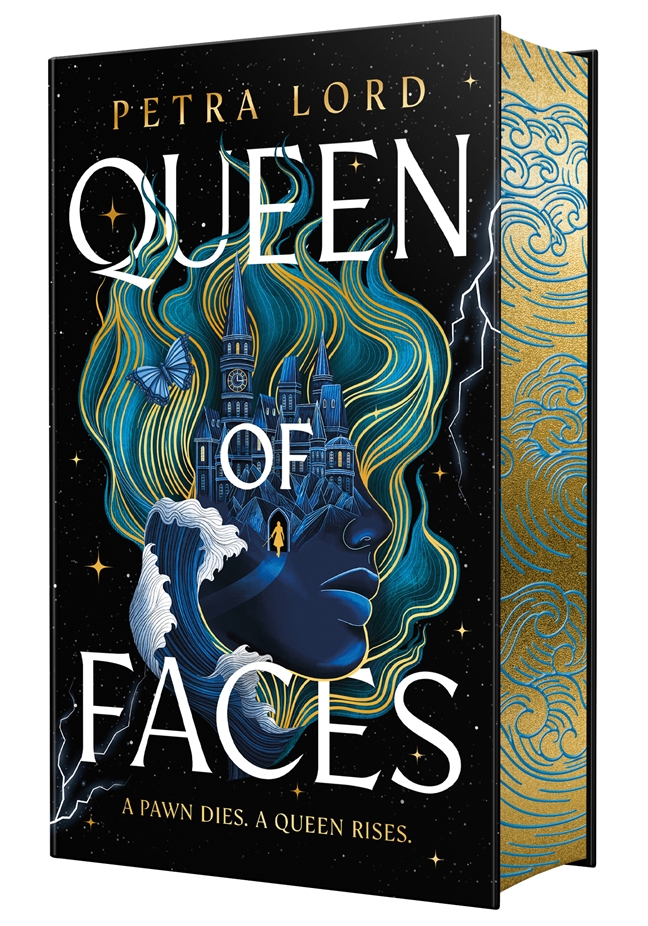
I was talking to my roommate about how much we struggle with manga like My Hero Academia and Bleach (walk with me, I swear it's relevant) because it seems that the creator's solution for writing themselves into a corner is to give the protagonist a new skill out of nowhere that will somehow miraculously aid them in escaping their current circumstances. Aside from the classifications of magic, which were already interesting enough, the thing I liked the most about the magic system is how the skill tree is sort of built in, so there's an in-world mechanism for leveling up existing skills through practice and circumstance--which in turn makes it much less jarring when those skills do develop! I also like that the magic school isn't set up as some kind of egalitarian paradise, but rather that it's acknowledged and wrestled with in the text that there's privilege in being able to attend Paragon, and that not everyone has an equal shot at acceptance.
Secondly, I think the exploration of gender in this book is really interesting. One of the reasons I was interested in reading is because I feel that own-voices trans narratives deserve more of a space in the sci-fi/fantasy literary world, and to that end I think Petra Lord did a really masterful job of exploring the nuances of gender expression in a world where you can theoretically swap between sexes whenever you want (as long as you have the money for it). She does a fantastic job of exploring how alien and claustrophobic Ana's Edgar body feels to her as someone who is decidedly female but stuck in a male body, and how much more at ease she feels when her outsides match her insides -- but she also explores Nell/Wes's somewhat more ambiguous feelings about being born in a female body and now living in a male one, and Nima's feelings about being both at once. The thoughtful handling of these different relationships to gender and sex were one of my favorite things about the book.
Also, the prose was just really lovely! Even on a line-by-line level I felt that descriptions flowed smoothly and that the figurative language was fresh and interesting without seeming overwrought. Interestingly, the word choice also neatly straddled the line between old-fashioned and modern, which gave a sort of timelessness to the setting. Just from an "enjoyment of reading" perspective I really enjoyed that.
However, there were also a few things that were big misses for me. A couple of them are rather minor, so I'll get them out of the way first:
- Why does the word manga exist in this world when Japan doesn't? In fact, early on in the book we get quite a lot of manga references -- that she's a romance manga reader, that her Codex skill is named after a skill in her favorite manga, etc. -- and then after about one-third of the book we never hear about the manga again.
- Nell/Wes is unable to remember her mother's surname following her Ousting because of the memory blocks, but she can remember her father's full name even though they have the same last name. Shouldn't she be unable to remember either OR remember both?
- A curse was used to remove the entire Shenti language from the world, but when Ana enters Khaiovhe's pocket universe she hears characters speaking Shenti.
The other things that were misses for me were a little more significant. The first is that we're told, repeatedly and by many characters, that Ana is an incredible strategist and a genius planner, and yet we rarely -- if ever -- actually see her strategize on-page. It seemed that most of the planning she does is off-page and only referenced once the action is over. In fact, what we see even more of on-page is Ana rushing headlong and thoughtlessly into danger, then getting her ass kicked -- and more than once, that ass-kicking ends with her somehow succeeding in her goal anyway because the person who kicked her ass is so impressed by her strategy skills. (Huh??) I wish that there had been more work done on-page to establish Ana's critical thinking skills and ability to strategize and come up with plans and gambits for her crew. It just felt quite a lot like the reader is being smacked over the head with the idea that Ana is great at planning, but we're kind of expected to believe it without evidence.
The second bigger miss for me is honestly the whole country of Shenti. The "enemy" country with the bloodthirsty dictator who wants to conquer the whole world, who sends his citizens to "redemption camps" when they outlive their usefulness to the state (or when they commit petty crimes)... is just China? Some of the names of the camps that Khaiovhe liberates are actual Chinese words ("lianhua" means lotus flower and "Hengshui" is an actual city in Hebei province, for example) and others, like Qinhua and Meidong, are pretty clearly meant to draw from Chinese. I guess I personally am just a little tired of second-world fantasy novels using China as the stand-in for the evil warlike nation that the protagonist nation is fighting against, even if it's shown by the end of the book that Caimor isn't all it's cracked up to be either.
All in all, I do think that this book has a really interesting premise, and I think Petra Lord has an absolutely stunning writing style and does a fantastic job with navigating the internal lives of her protagonists. I think she's created a lush and interesting world of magic that is full of potential for incredible storytelling. I just hope that the editors of this and the next books will pay a little more mind to the things mentioned above. Even though this installation didn't totally hit for me, I plan to stay tuned for the second and see where this world will go!


0 comments