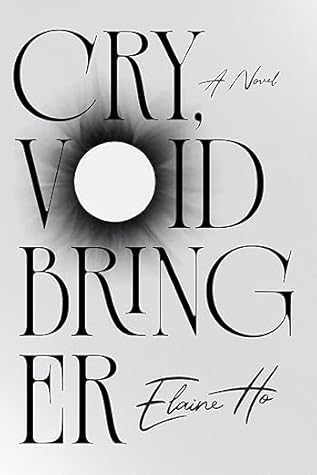
I admit I'm kind of struggling to figure out how to rate this book, because while it was beautifully written and experimental in very fun and engaging ways, it was also fucking devastating and I don't think I'm likely to reread again because my heart can only handle so much!
I feel like the best word I can use to describe this book is "messy." I don't mean that in a negative way, in fact quite the opposite -- the messiness of the interpersonal relationships, the politics of the world, and the characters' internal motivations is actually really compelling, and I think that messiness does a lot to drive the story forward. Hammer is so jaded that she's completely unable to be optimistic or hopeful about the world or her place in it; Naias is so blinded by her ambition that she doesn't realize that it's not possible for the oppressed to gain their liberation by convincing the oppressor to like them. And in the end, none of them are able to escape the yoke of empire.
(Actually, the premise of this novel can be succinctly summed up in the words of Audre Lorde: "The master's tools can never dismantle the master's house." Obviously she was writing in a very different context, but the words themselves echo -- throughout the novel, even as they rage against the empire that subjugates them, all of the characters still try to work within the boundaries of that empire to plot their escapes. They are really only to achieve liberation and rebirth when they finally raze the whole thing to the ground.)
I found that this was a book where many of the characters were deeply unlikable but nonetheless compelling. In a similar vein to my review of Emily Tesh's Some Desperate Glory, it reminded me once again that people deserve liberation from oppression regardless of whether I find them individually likeable. Earlier I mentioned the book being interestingly experimental, and this was one of the experimental bits that I really enjoyed: having a narrative voice that not only directly addresses the reader, but also is quite incisive in its challenge to what I'm sure many readers (including myself) were thinking.
"Tyranny doesn't happen in the blink of an eye," she says. "It is a slow descent, helped by the complicity of those who think they have no power." Later, she adds, "I would've acted differently, you say, thinking up all the different vectors that make you special I would've seen this for what it was. I would stand up against injustice." These were well-timed interjections for me, located around 75% of the way into the book, when things are just about to break bad in a major way and when many readers (talking about myself here) are making comments in their Notes app like "Khall is so annoying lmao girl stand UP."
Anyway, this book was crazy. It was also devastating and brutal and I probably wouldn't read it again or recommend it to people who don't like being depressed after they're done with a book. Also, a horse really hates to see Elaine Ho coming, I fear. But this was a beautifully written book and even though I need to go lay down and think about my life choices for a while, I really did enjoy the journey.
I feel like the best word I can use to describe this book is "messy." I don't mean that in a negative way, in fact quite the opposite -- the messiness of the interpersonal relationships, the politics of the world, and the characters' internal motivations is actually really compelling, and I think that messiness does a lot to drive the story forward. Hammer is so jaded that she's completely unable to be optimistic or hopeful about the world or her place in it; Naias is so blinded by her ambition that she doesn't realize that it's not possible for the oppressed to gain their liberation by convincing the oppressor to like them. And in the end, none of them are able to escape the yoke of empire.
(Actually, the premise of this novel can be succinctly summed up in the words of Audre Lorde: "The master's tools can never dismantle the master's house." Obviously she was writing in a very different context, but the words themselves echo -- throughout the novel, even as they rage against the empire that subjugates them, all of the characters still try to work within the boundaries of that empire to plot their escapes. They are really only to achieve liberation and rebirth when they finally raze the whole thing to the ground.)
I found that this was a book where many of the characters were deeply unlikable but nonetheless compelling. In a similar vein to my review of Emily Tesh's Some Desperate Glory, it reminded me once again that people deserve liberation from oppression regardless of whether I find them individually likeable. Earlier I mentioned the book being interestingly experimental, and this was one of the experimental bits that I really enjoyed: having a narrative voice that not only directly addresses the reader, but also is quite incisive in its challenge to what I'm sure many readers (including myself) were thinking.
"Tyranny doesn't happen in the blink of an eye," she says. "It is a slow descent, helped by the complicity of those who think they have no power." Later, she adds, "I would've acted differently, you say, thinking up all the different vectors that make you special I would've seen this for what it was. I would stand up against injustice." These were well-timed interjections for me, located around 75% of the way into the book, when things are just about to break bad in a major way and when many readers (talking about myself here) are making comments in their Notes app like "Khall is so annoying lmao girl stand UP."
Anyway, this book was crazy. It was also devastating and brutal and I probably wouldn't read it again or recommend it to people who don't like being depressed after they're done with a book. Also, a horse really hates to see Elaine Ho coming, I fear. But this was a beautifully written book and even though I need to go lay down and think about my life choices for a while, I really did enjoy the journey.


0 comments